Following successful events in Beijing and Shanghai, Liu Shen & Associates brought its AI-focused seminar series to a close with the final event in Shenzhen.
On the afternoon of September 18, 2026, Liu Shen & Associates, together with the Conways IP Innovation Summit and the Technology and Innovation Support Center (TISC) of the Shenzhen Nanshan District Innovation and Development Promotion Center (Nanshan District Intellectual Property Promotion Center), jointly hosted a seminar entitled "AI Without Boundaries, Protection with Purpose: Global Strategies for Protecting AI Innovations and Managing Compliance" at the Nanshan Intellectual Property Protection Center in Shenzhen.
The seminar brought together more than 50 invited guests from businesses and research institutions for in-depth discussions on key issues surrounding AI-related patents, copyright, trademarks, trade secrets, data compliance and ethical governance. The event provided practical guidance on comprehensive IP protection strategies for innovators across the Guangdong–Hong Kong–Macao Greater Bay Area.
In April 2026, Liu Shen hosted its first AI seminar in Beijing under the theme "Shaping the Future: Multifaceted IP Protection and Risk Management in the Age of AI", alongside the release of its practical guide, Intellectual Property Protection for Artificial Intelligence (2026 Edition). The Shanghai seminar followed in May, jointly organized with the Shanghai Intellectual Property Service Center and Tianqi Heima Information Technology Co., Ltd. Under the theme "Securing the Future: Strategic IP Protection and Risk Mitigation in the Age of AI", the event featured practical discussions on patents, copyright, trademarks, data compliance and dispute resolution in the AI sector.
Building on the insights and experience gained from the first two events, the Shenzhen seminar further expanded the scope of discussions, focusing on emerging issues in the global protection of AI innovations and AI governance and compliance. Tailored to Shenzhen's position as a major technology and innovation hub and a key driver of the Greater Bay Area's economic development, the seminar offered practical, industry-relevant strategies for businesses navigating the evolving AI landscape.
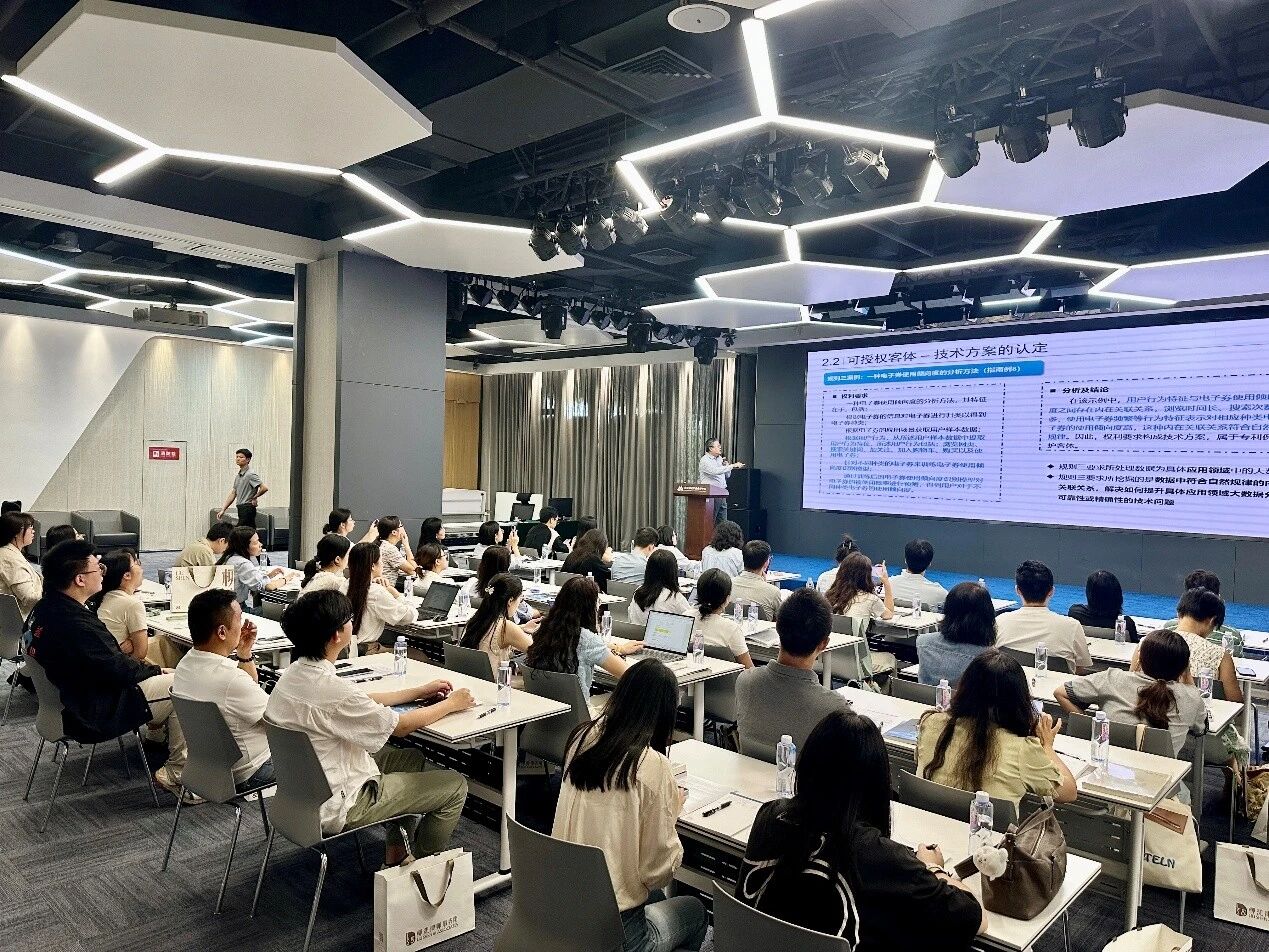
Session One: Patent Protection for AI Innovations — Patent Grant and Dispute Resolution Practices in China, the United States and Europe
Are AI-related innovations eligible for patent protection? How should inventorship be determined? What challenges do AI-related inventions face in meeting patentability requirements, particularly inventive step and sufficiency of disclosure? This session provided a comprehensive overview of patent examination standards and emerging practices concerning AI-related inventions in China, the United States and Europe. LI Lin, JIN Yujie and ZHANG Jing of Liu Shen examined AI patent examination and grant practices in China, the United States and Europe, respectively. CHEN Jinlin focused on current practices in AI-related patent dispute resolution. The speakers compared key similarities and differences among the three jurisdictions in patent examination standards, filing strategies and the scope of patent protection, offering practical insights for businesses developing and managing global AI patent portfolios.
Session Two: Copyright Protection in the Age of AI — Copyrightability of AI-Generated Content and Legal Boundaries of Large Model Training
Can AI-generated content qualify for copyright protection? How should copyright ownership be determined? What are the legal boundaries governing the use of copyrighted works in training large AI models? ZHENG Peng, Partner at Liu Shen, addressed these questions from a comparative Chinese and US legal perspective. His presentation examined the copyrightability of AI-generated content (AIGC), copyright ownership, available protection mechanisms and copyright registration practices. Drawing on legal issues arising from the use of copyrighted works in training large AI models, ZHENG also discussed licensing considerations, potential copyright infringement risks and corresponding dispute resolution strategies.
Session Three: Trademark Protection in the Age of AI — Dynamic Portfolio Management, Risk Monitoring and Cross-Border Strategies
As AI products and services continue to evolve rapidly, how can businesses proactively protect their brands while effectively addressing trademark squatting, infringement and risks associated with cross-border operations? YUAN Yuan, Partner at Liu Shen, examined the current landscape and evolving practices of trademark protection in the AI industry. Her presentation addressed dynamic trademark portfolio strategies covering core brands and related sub-brands, as well as trademark risk monitoring and early warning mechanisms. Drawing on comparative analysis across jurisdictions, YUAN also explored international trademark filing strategies and cross-border protection approaches, providing practical guidance for businesses seeking to strengthen their brand protection in global markets.
Session Four: Three Lines of Defense in AI Governance — Trade Secrets, Data Compliance and Ethical Risks
How can businesses protect their core technologies and sensitive information throughout the development, training and deployment of AI systems while meeting data compliance requirements and addressing ethical risks? QIU Jun, Partner at Liu Shen, examined trade secret protection, data compliance and ethical governance as three essential components of AI risk management. Drawing on recently issued guidance from the Supreme People's Court and developments in judicial practice concerning trade secret disputes, QIU analyzed key challenges in protecting trade secrets and resolving related disputes in the AI sector. He also provided practical recommendations for strengthening corporate trade secret management and protection mechanisms. Building on the relevant judicial guidance and recently issued measures concerning AI technology ethics, QIU further examined data compliance obligations and ethical risks associated with the development, release and use of AI tools. His presentation outlined actionable compliance and governance measures to help businesses identify and manage these risks effectively.
The decision to hold the seminar at the Nanshan Intellectual Property Protection Center in Shenzhen reflected the strategic importance of the region's innovation ecosystem. As a major technology and innovation hub within the Guangdong–Hong Kong–Macao Greater Bay Area, Nanshan is home to numerous innovative businesses specializing in artificial intelligence, big data, intelligent manufacturing and other emerging technologies. Liu Shen has continued to deepen its professional engagement in Shenzhen. The firm has previously made substantial contributions to the development of industry association standards coordinated and drafted under the auspices of the Shenzhen Artificial Intelligence Industry Association, including the Guidelines on Trade Secret Protection for Enterprises Engaged in Generative and Synthetic (Deep Synthesis) Technologies in the AI Industry. Liu Shen has also conducted a number of awareness and training sessions on trade secret protection at the Nanshan Intellectual Property Protection Center, providing practical guidance to businesses seeking to establish and strengthen their IP protection frameworks in the age of AI.
AI innovation knows no boundaries, while effective protection requires sound legal strategies. From Beijing to Shanghai and finally Shenzhen, Liu Shen's AI seminar series has provided a platform for exploring the legal challenges and practical considerations associated with AI innovation. As the concluding event of the series, the Shenzhen seminar built on the practical insights from the previous sessions while addressing the specific needs of the Greater Bay Area's dynamic innovation ecosystem. With a global perspective, it brought together industry participants to examine key issues in protecting AI innovations and navigating an increasingly complex compliance and governance landscape. Looking ahead, Liu Shen remains committed to providing forward-looking, practical and strategically focused legal services, working with businesses and other stakeholders to address emerging challenges in AI intellectual property protection and compliance, safeguard technological innovation, and support sustainable growth in an evolving global market.